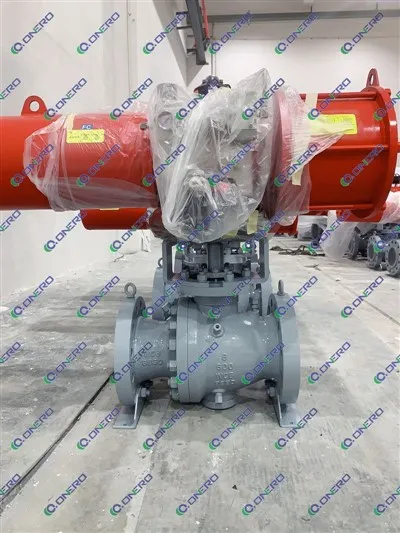
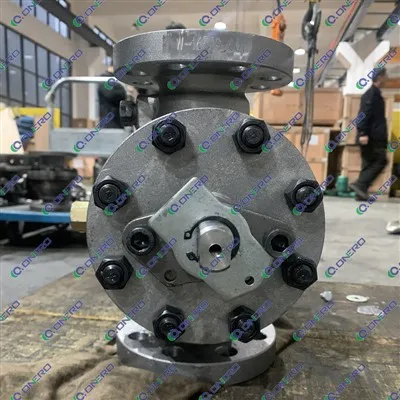
Hey there! As a supplier of DBB Double Ball Valves, I often get asked a burning question: Can a DBB Double Ball Valve be used in high - temperature applications? Well, let's dive right into it and find out.
First things first, let's understand what a DBB Double Ball Valve is. A DBB Double Ball Valve, as the name suggests, has two ball valves integrated into a single unit. This design provides a unique double block and bleed functionality. When the two balls are closed, they create a secure block, and the bleed port in between can be opened to release any trapped pressure or fluid. It's widely used in many industries, from oil and gas to chemical processing and power generation.
Now, high - temperature applications can be a real challenge for valves. The extreme heat can cause materials to expand, degrade, and lose their mechanical properties. So, when it comes to using a DBB Double Ball Valve in high - temperature settings, several factors come into play.


Material Selection
The materials used in the construction of a DBB Double Ball Valve are crucial. For high - temperature applications, we need materials that can withstand the heat without losing their strength or sealing properties. Stainless steel is a popular choice. It has excellent corrosion resistance and can handle relatively high temperatures. But for even more extreme heat, alloys like Inconel or Hastelloy might be the way to go. These superalloys have exceptional high - temperature strength and oxidation resistance.
For example, if you're dealing with a process where the temperature can reach up to 500°C or even higher, using a DBB Double Ball Valve made from Inconel balls and a Hastelloy body can be a smart move. These materials will maintain their integrity and ensure that the valve functions properly over a long period of time.
Sealing Mechanisms
The sealing system of a DBB Double Ball Valve is another important aspect. At high temperatures, traditional elastomeric seals can quickly fail. Elastomers like rubber or silicone start to melt or harden, which leads to leaks. To combat this, we often use metal - to - metal seals in high - temperature applications.
Metal - to - metal seals are designed to create a tight seal even under extreme heat. The balls and seats are machined to precise tolerances, and when the valve is closed, the metal components come together to form a reliable barrier against fluid and gas leakage. However, it's important to note that metal - to - metal seals require a certain amount of pressure to operate effectively. So, in some cases, we might also use a combination of metal and non - metal seals to optimize performance.
Design Considerations
The design of the DBB Double Ball Valve also affects its suitability for high - temperature applications. A well - designed valve will have features that help to dissipate heat and prevent thermal stress from building up. For instance, the valve body might have fins or other heat - dissipating structures to transfer heat away from critical components.
In addition, the valve should be designed to allow for thermal expansion. If the valve parts are too rigidly fixed and there's no room for expansion, the excessive stress can cause the valve to fail. So, designers often incorporate expansion joints or other flexible elements into the valve structure to accommodate thermal changes.
Real - World Applications
Let's take a look at some real - world scenarios where DBB Double Ball Valves are used in high - temperature applications. In the power generation industry, these valves are used in steam systems. Steam can reach very high temperatures, sometimes over 500°C. A DBB Double Ball Valve with the right materials and design can handle the steam flow and provide reliable shut - off and control.
Another example is in the chemical processing industry. Many chemical reactions take place at high temperatures, and DBB Double Ball Valves are used to control the flow of hot chemicals. They need to resist corrosion from the chemicals as well as the high temperatures.
Comparison with Other Valves
Now, you might be wondering how DBB Double Ball Valves stack up against other types of valves in high - temperature applications. Let's briefly compare them with some common valve types.
- Top Entry Trunnion Ball Valve: The Top Entry Trunnion Ball Valve is another popular choice for high - temperature applications. It has a similar ball - based design but with a top - entry configuration, which makes it easier to access and maintain. However, a DBB Double Ball Valve offers the double block and bleed feature, which can be a significant advantage in applications where safety and isolation are critical.
- Three Way Ball Valve: The Three Way Ball Valve is designed to divert the flow of fluid in three different directions. While it can also be used in high - temperature settings, it doesn't have the double block and bleed functionality of a DBB Double Ball Valve. So, if you need to isolate a section of the pipeline for maintenance or safety reasons, a DBB Double Ball Valve might be a better option.
- Jacket Ball Valve: The Jacket Ball Valve has a jacket around the valve body that can be filled with a heating or cooling medium. This is useful for applications where you need to control the temperature of the fluid inside the valve. However, in terms of high - temperature resistance and the double block and bleed feature, a DBB Double Ball Valve can be a more suitable choice.
Conclusion
So, can a DBB Double Ball Valve be used in high - temperature applications? The answer is yes, but it's all about making the right choices in terms of materials, sealing mechanisms, and design. With the proper selection and engineering, a DBB Double Ball Valve can provide reliable performance in even the most extreme high - temperature environments.
If you're in the market for a DBB Double Ball Valve for high - temperature applications or have any questions about our products, we'd love to hear from you. Feel free to reach out for a detailed discussion, and we'll work with you to find the best valve solution for your specific needs.
References
- Valve Handbook, Ken Cameron
- High - Temperature Materials and Their Applications, Edited by S. Hanada, T. Saito, and H. Harada