


Jacket Ball Valve
Body: ASTM A216-WCB
Product Introduction
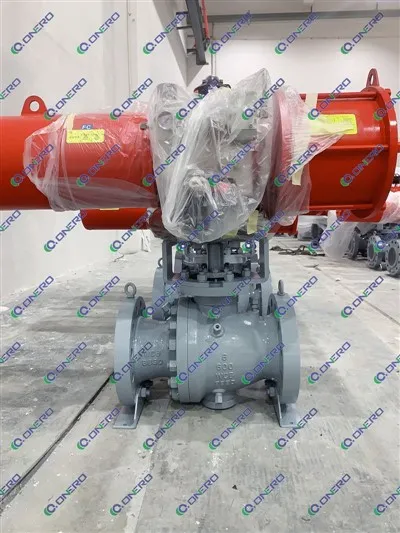
The Jacket Ball Valve is a ball valve with a jacketed body, allowing heated or cooled fluids to circulate around the valve body or cover.
Product Advantages
Temperature Control
Maintains process fluids at the required temperature or prevents freezing.
Flow Optimization
Reduces fluid viscosity, ensuring smooth operation in low-temperature or high-viscosity fluid applications.
Reliable Shutdown
Tight seals ensure leak-free operation of water, oil, gas, or chemical fluids.
Material Specifications And Dimensions


|
No. |
Part |
Material |
|
1 |
Body |
ASTM A216-WCB |
|
2 |
Jacket |
1015 Stainless Steel |
|
3 |
Seat |
PTFE RPTFE PEEK PPL |
|
4 |
Screwed Cover |
ASTM A216-WCB |
|
5 |
Ball |
A351-CF8,CF8M,CF3,CF3M,Duplex |
|
6 |
Gasket |
PTFE Graphite |
|
7 |
Thrust Washer |
PTFE |
|
8 |
Stem |
A105+ENP A182-F304, F316, F316L, F304L,17-4PH, F51 |
|
9 |
Packing |
PTFE Graphite |
|
10 |
Gland Flange |
A216-WCB A351-CF8 |
|
11 |
Limited Plate |
1015+Cr Carbon Steel+Cr |
|
12 |
Retainer |
Carbon Steel |
|
13 |
Lever |
A216-WCB |
|
14 |
Screw |
ASTM A193-B7,B8 |
Why Choose Us
Professional Team
Onero Valve Corporation currently operates two production bases, employing a diverse technical staff of 40 individuals and a total workforce exceeding 140 employees.
Fully Equipped
The factory boasts a comprehensive array of equipment, supported by specialized personnel dedicated to processing, batching, assembly, testing, painting, and boxing, all of whom exercise rigorous process control.
Certifications
Onero Valve Corporation has obtained ISO9001, API-6D, ISO14001 environmental management system certification, and ISO18001 Occupational Health and Safety certification.
Sales Market
Our core products are exported to regions such as the United States, Europe, South Korea, and the Middle East, where we maintain close collaborations with numerous companies and have received praise from our customers.
FAQs
Q: What materials are commonly used for jacket ball valves?
A: Jacket Ball Valves are typically constructed from stainless steel, carbon steel, or alloy steel for the body and ball, with PTFE or other high-performance polymers often used for the seat material to ensure good sealing properties.
Q: How do you install a jacket ball valve?
A: To install a jacket ball valve, first ensure the pipeline is clean and free of debris. Align the valve with the pipe ends, insert gaskets if required, and then bolt the valve in place using even pressure to avoid uneven stress.
Q: Can a jacket ball valve be used in corrosive environments?
A: Yes, jacket ball valves can be used in corrosive environments, especially if they are made from corrosion-resistant materials like stainless steel or have protective coatings designed to resist chemical corrosion.
Q: What maintenance is required for a jacket ball valve?
A: Regular maintenance includes checking for leaks, inspecting seals and gaskets for wear, cleaning the valve to remove any buildup, and ensuring that the actuation mechanism operates smoothly without excessive force.
Q: How does temperature affect the performance of a jacket ball valve?
A: Temperature extremes can impact the materials and seals of a jacket ball valve. High temperatures may require special heat-resistant materials, while low temperatures necessitate materials that prevent brittleness and cracking.
Q: Are there different sizes available for jacket ball valves?
A: Yes, jacket ball valves come in a range of sizes to accommodate various pipe diameters, from small residential applications up to large industrial pipes, with common sizes including 1/2 inch to several feet in diameter.
Q: What is the typical pressure rating for a jacket ball valve?
A: The pressure rating for a jacket ball valve varies depending on its size and construction but typically ranges from ANSI class 150 to class 2500, which covers most industrial and commercial applications.
Q: Can a jacket ball valve be repaired if it develops a leak?
A: Yes, many jacket ball valves can be repaired by replacing worn-out seals or gaskets. However, extensive damage or internal corrosion might necessitate valve replacement rather than repair.
Q: Is it possible to automate a jacket ball valve?
A: Yes, jacket ball valves can be automated through the use of electric, pneumatic, or hydraulic actuators, allowing for remote operation and integration into automated control systems.
Q: What is the expected lifespan of a jacket ball valve?
A: The expected lifespan of a jacket ball valve depends on factors such as operating conditions, maintenance practices, and material quality but generally ranges from 10 to 20 years with proper care and usage.
Hot Tags: jacket ball valve, China jacket ball valve manufacturers, suppliers, factory, three piece ball valve, ball valve for valve safety switches, ball valve for beverage industry, ball valve for cartridge filters, ball valve for valve innovation switches, ball valve for water
Previous
Four Way Ball ValveNext
Wafer Ball ValveYou Might Also Like




Send Inquiry