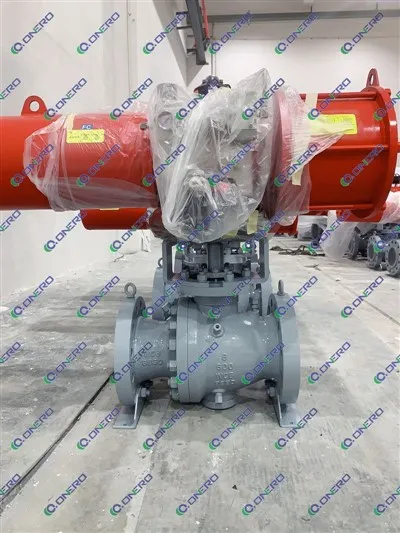
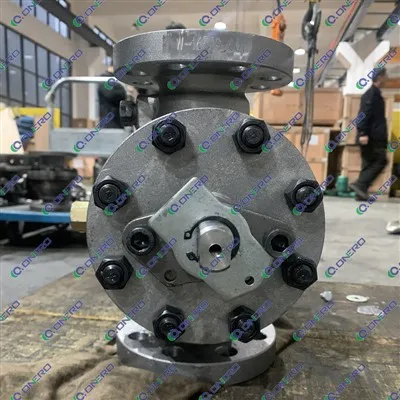
As a supplier of top entry valves, I often encounter inquiries from customers about the differences between top entry valves and side entry valves. In this blog post, I'll delve into the key distinctions between these two types of valves, exploring their structures, applications, advantages, and disadvantages to help you make an informed decision when choosing the right valve for your project.
Structural Differences
The most obvious difference between top entry valves and side entry valves lies in their construction and the way they are assembled.
Top Entry Valves
Top entry valves are designed with a body that allows access to the internal components, such as the ball, stem, and seats, from the top. This design feature simplifies maintenance and repair procedures because technicians can reach the valve internals without removing the valve from the pipeline. The top cover of the valve can be easily removed, providing direct access to the critical parts. This is particularly beneficial in applications where downtime needs to be minimized, as maintenance can be carried out quickly and efficiently.
Side Entry Valves
In contrast, side entry valves are constructed with the body split horizontally or vertically, and the internal components are accessed from the side. This design typically involves multiple body pieces that are bolted together. While side entry valves can be more complex to disassemble compared to top entry valves, they are often used in high - pressure and large - diameter applications due to their robust construction.
Applications
Both top entry and side entry valves find their places in various industries, but their applications can differ based on their design characteristics.
Top Entry Valves
Top entry valves are commonly used in industries where quick maintenance is crucial. For example, in the oil and gas refining industry, where continuous operation is essential, top entry valves allow for rapid inspection and replacement of internal parts. They are also suitable for applications with limited space, as they do not require a large lateral clearance for disassembly. Additionally, top entry valves are often used in pipelines transporting clean fluids, such as natural gas or refined petroleum products, where the risk of internal component fouling is relatively low.
Side Entry Valves
Side entry valves are well - suited for high - pressure and high - temperature applications. In offshore oil and gas platforms, side entry valves are frequently used in subsea pipelines and wellhead control systems. Their ability to withstand extreme operating conditions makes them a reliable choice for these harsh environments. Moreover, side entry valves are commonly used in large - diameter pipelines, where their multi - piece construction can better handle the forces associated with large volumes of fluid flow.
Advantages and Disadvantages
Top Entry Valves
Advantages
- Easy Maintenance: As mentioned earlier, the top - access design allows for quick and easy maintenance, reducing downtime and maintenance costs.
- Space - Saving: They require less lateral space for disassembly, making them suitable for installations with limited space.
- Lower Installation Cost: The simpler design often results in lower installation costs compared to side entry valves.
Disadvantages
- Limited Pressure and Size Range: Top entry valves may not be suitable for extremely high - pressure or very large - diameter applications due to their design limitations.
- Sealing Challenges: In some cases, the top - cover sealing can be more challenging to maintain compared to the multi - piece sealing of side entry valves.
Side Entry Valves
Advantages
- High - Pressure Resistance: Their robust construction enables them to withstand high pressures and temperatures, making them ideal for demanding applications.
- Large - Diameter Suitability: Side entry valves are well - suited for large - diameter pipelines, where they can handle high - volume fluid flow.
- Better Sealing in Some Cases: The multi - piece construction can provide better sealing in certain high - pressure and high - temperature scenarios.
Disadvantages
- Complex Maintenance: Disassembling and reassembling side entry valves can be time - consuming and requires more skilled labor, leading to higher maintenance costs and longer downtime.
- Higher Installation Cost: The multi - piece design and the need for more precise alignment during installation result in higher installation costs.
Material and Design Considerations
Both top entry and side entry valves can be made from a variety of materials, including cast steel and forged steel.
Cast Steel Valves
Cast steel valves are made by pouring molten steel into a mold. They are cost - effective and can be produced in complex shapes. Cast Steel Fixed Ball Valve is a popular choice for many applications, offering good corrosion resistance and mechanical properties. Cast steel top entry and side entry valves are suitable for medium - pressure and medium - temperature applications.


Forged Steel Valves
Forged steel valves are manufactured by applying pressure to a heated steel billet to shape it. This process results in a more homogeneous and stronger material compared to cast steel. Forged Steel Fixed Ball Valve and Forged Steel Fixed Ball Valve are often used in high - pressure and high - temperature applications, where the strength and reliability of the valve are critical.
Conclusion
In summary, the choice between a top entry valve and a side entry valve depends on several factors, including the application requirements, operating conditions, maintenance needs, and budget. Top entry valves offer easy maintenance and are suitable for applications where downtime needs to be minimized and space is limited. On the other hand, side entry valves are better suited for high - pressure, high - temperature, and large - diameter applications, despite their more complex maintenance requirements.
If you are still unsure which type of valve is right for your project, or if you have any questions about our top entry valves, please feel free to reach out to us. Our team of experts is ready to assist you in selecting the most appropriate valve solution for your specific needs. We look forward to the opportunity to work with you and help you achieve optimal performance in your operations.
References
- Valve Handbook, 4th Edition, by J. F. Carlucci
- Pipeline Rules of Thumb Handbook, 5th Edition, by E. W. McAllister