Hey there! As a four - port valve supplier, I've been getting a lot of questions lately about what these valves are all about and what they can do. So, I thought I'd sit down and write this blog to break it all down for you.


Let's start with the basics. A four - port valve, as the name suggests, has four ports. These ports are the entry and exit points for the fluid or gas that the valve is controlling. Now, you might be wondering, "Why four ports? Why not two or three?" Well, the extra ports give the four - port valve a lot more flexibility in terms of how it can direct the flow.
One of the main functions of a four - port valve is flow diversion. It can redirect the flow of a fluid or gas from one path to another. For example, in a complex piping system, you might have multiple destinations for a particular fluid. A four - port valve can be used to send that fluid to different parts of the system as needed. Say you have a heating system where you want to direct hot water to different rooms at different times. A four - port valve can make that happen by diverting the hot water flow accordingly.
Another important function is mixing. Sometimes, you need to combine two different fluids or gases in a specific ratio. A four - port valve can be configured to do just that. It can take in two different substances from separate ports and then mix them before sending the combined mixture out through another port. This is really useful in chemical processing plants, where precise mixing of different chemicals is crucial for the production of various products.
Four - port valves are also great for isolation. In some cases, you might want to isolate a particular part of a system from the rest. The valve can be adjusted to block the flow between certain ports, effectively isolating that section. This is important for maintenance purposes. If there's a problem in one part of the system, you can use the four - port valve to isolate it without having to shut down the entire system.
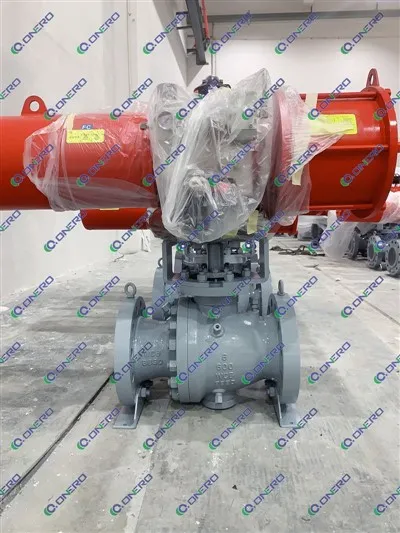
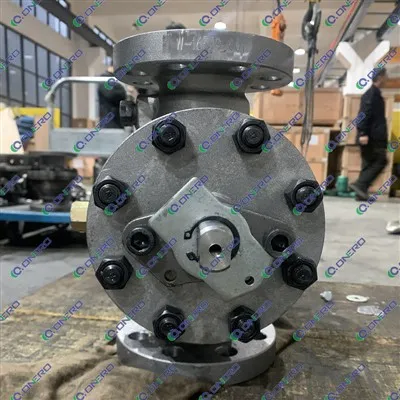
Now, let's talk about some of the different types of four - port valves and their specific functions. There are ball valves, which are known for their durability and tight shut - off. Ball valves use a spherical disc (the ball) with a hole in it to control the flow. When the hole in the ball aligns with the ports, the flow is open, and when it's turned, the flow is blocked. If you're interested in a type of ball valve, you might want to check out our Jacket Ball Valve and Carbon Steel Manual Ball Valves. These valves are built to last and can handle a wide range of pressures and temperatures.
Then there are butterfly valves. These valves use a disc that rotates around an axis to control the flow. They're relatively simple in design and are often used in applications where a quick shut - off is needed. Butterfly valves are commonly found in large - scale water distribution systems.
Four - port valves are used in a wide variety of industries. In the HVAC (Heating, Ventilation, and Air Conditioning) industry, they play a crucial role in controlling the flow of air and refrigerant. They help in maintaining the right temperature and humidity levels in buildings. In the oil and gas industry, four - port valves are used to control the flow of oil, gas, and other fluids in pipelines and processing plants. They ensure the safe and efficient transportation and processing of these valuable resources.
In the automotive industry, four - port valves can be found in the engine cooling systems. They help in regulating the flow of coolant to keep the engine at the right temperature. Without these valves, the engine could overheat, leading to serious damage.
If you're in the market for a four - port valve, there are a few things you need to consider. First, think about the type of fluid or gas you'll be dealing with. Different valves are designed to handle different substances. For example, if you're working with corrosive chemicals, you'll need a valve made from a material that can resist corrosion, like stainless steel.
Next, consider the pressure and temperature requirements of your system. The valve needs to be able to withstand the pressure and temperature conditions without leaking or malfunctioning. Also, think about the flow rate. You'll need to choose a valve that can handle the volume of fluid or gas that your system requires.
The size of the valve is another important factor. A valve that's too small won't be able to handle the flow, and a valve that's too large can be expensive and may not fit properly in your system. Make sure to measure the pipe sizes in your system accurately before choosing a valve.
As a four - port valve supplier, I can tell you that we offer a wide range of high - quality valves to meet your needs. Whether you're looking for a simple ball valve or a more complex multi - function valve, we've got you covered. Our Jacket Ball Valve is a great option for many applications. It's designed to provide reliable performance and long - term durability.
If you're interested in learning more about our four - port valves or have any questions about which valve is right for your specific application, don't hesitate to get in touch. We're here to help you make the best choice for your system. Contact us to start a procurement discussion and find out how we can meet your valve needs.
References
- "Valve Handbook: Principles and Applications", Edited by J. T. Oden, provides in - depth knowledge about different types of valves and their functions.
- "Industrial Piping Design Handbook", by R. K. Sinha, offers practical insights into valve selection and installation in industrial piping systems.