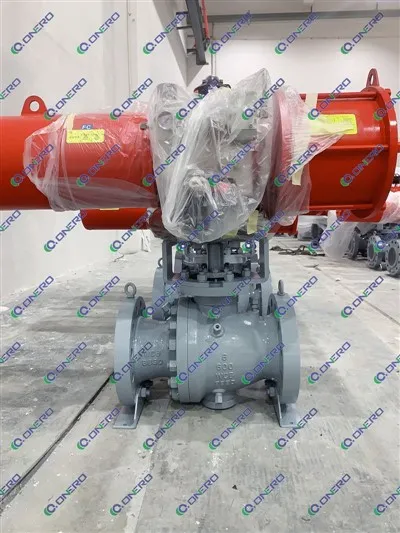
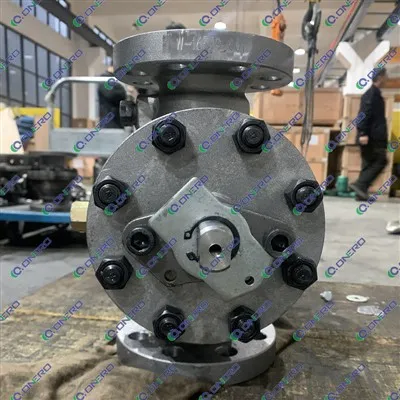
Hey there! As a supplier of four - way valves, I often get asked about the actuation forces required for these valves. It's a crucial topic because getting the actuation force right can make or break the performance of a four - way valve in a system.
First off, let's understand what a four - way valve is. A four - way valve is a type of valve that has four ports and can direct the flow of fluid in multiple ways. It's commonly used in HVAC systems, industrial processes, and other applications where controlling the direction of fluid flow is necessary.


Factors Affecting Actuation Forces
The actuation force of a four - way valve depends on several factors. One of the main factors is the size of the valve. Larger valves generally require more force to actuate because there's more area for the fluid pressure to act on. For instance, a 4 - inch four - way valve will need a stronger actuator compared to a 1 - inch valve.
Another factor is the type of fluid flowing through the valve. If the fluid is viscous, like oil or some syrupy chemicals, it will create more resistance to the movement of the valve components. This means that more force is needed to open, close, or change the position of the valve. On the other hand, if the fluid is something like water, which has low viscosity, less force is usually required.
Pressure also plays a big role. Higher fluid pressures put more stress on the valve's internal parts. When the pressure is high, the actuator has to work harder to overcome the force exerted by the fluid on the valve's sealing surfaces and moving parts. For example, in a high - pressure hydraulic system, the four - way valve needs a powerful actuator to handle the pressure.
The design of the valve itself is another important factor. Some four - way valves have a more complex internal structure, with multiple chambers and passages. These valves may need more force to actuate because there are more components that need to be moved and aligned correctly.
Calculating Actuation Forces
Calculating the exact actuation force for a four - way valve can be a tricky business. There are some basic formulas and engineering principles that can give you a rough estimate. A common approach is to consider the force exerted by the fluid pressure on the valve's plug or disc.
The force (F) due to fluid pressure can be calculated using the formula F = P * A, where P is the fluid pressure and A is the effective area of the valve plug or disc. However, this is just a starting point. You also need to account for friction between the moving parts, the stiffness of the sealing materials, and any other resistive forces in the system.
In many cases, valve manufacturers like us use computer - aided design (CAD) and finite element analysis (FEA) software to simulate the valve's operation under different conditions. These tools can provide a more accurate prediction of the actuation forces required.
Types of Actuators and Their Force Requirements
There are different types of actuators used for four - way valves, each with its own force requirements.
Electric Actuators
Electric actuators are popular because they're easy to control and can be integrated into automated systems. The force they can generate depends on the motor size and the gearbox design. Smaller electric actuators may be sufficient for low - pressure, small - sized valves, while larger motors and more robust gearboxes are needed for high - pressure and large - sized valves.
Pneumatic Actuators
Pneumatic actuators use compressed air to generate force. They can provide a high amount of force relatively quickly. The force output of a pneumatic actuator is determined by the air pressure and the size of the piston or diaphragm inside the actuator. Pneumatic actuators are often used in industrial applications where a fast response time is required.
Hydraulic Actuators
Hydraulic actuators are known for their high - force capabilities. They use a liquid (usually oil) under pressure to move the valve. The force they can generate is proportional to the hydraulic pressure and the area of the piston in the actuator. Hydraulic actuators are commonly used in heavy - duty applications where large forces are needed to operate the valves.
Real - World Applications and Actuation Force Considerations
Let's take a look at some real - world applications of four - way valves and how actuation forces come into play.
In an HVAC system, four - way valves are used to reverse the flow of refrigerant, allowing the system to switch between heating and cooling modes. The actuation force required here is relatively low because the refrigerant pressures are not extremely high, and the valve size is typically not very large. Electric actuators are commonly used in these systems because they can be easily controlled by the HVAC controller.
In industrial hydraulic systems, four - way valves are used to control the movement of hydraulic cylinders. These systems often operate at high pressures, ranging from a few hundred to several thousand pounds per square inch (psi). As a result, high - force hydraulic actuators are needed to actuate the valves. The actuation force must be carefully calculated to ensure that the valve can operate smoothly and accurately in the high - pressure environment.
Choosing the Right Four - Way Valve and Actuator
As a four - way valve supplier, I can tell you that choosing the right valve and actuator combination is crucial. You need to consider all the factors we've discussed above, such as valve size, fluid type, pressure, and application requirements.
If you're in the market for a four - way valve, we also offer a range of other types of valves. For example, we have Carbon Steel Manual Ball Valves, which are great for manual flow control in various industrial applications. Our Three Way Ball Valve can provide more flexibility in fluid flow direction control. And if you need a valve with a drain, our Stainless Steel Ball Valve with Drain is a reliable option.
Let's Talk Business
If you're interested in learning more about four - way valves and the actuation forces required for your specific application, or if you're thinking about making a purchase, don't hesitate to reach out. We're here to help you find the perfect valve solution for your needs. Whether you're a small - scale operation or a large industrial facility, we have the expertise and products to meet your requirements.
References
- "Valve Handbook" by Valve Manufacturers Association
- Engineering textbooks on fluid mechanics and valve technology