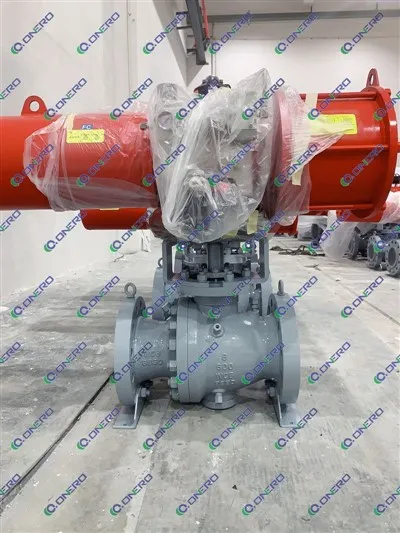
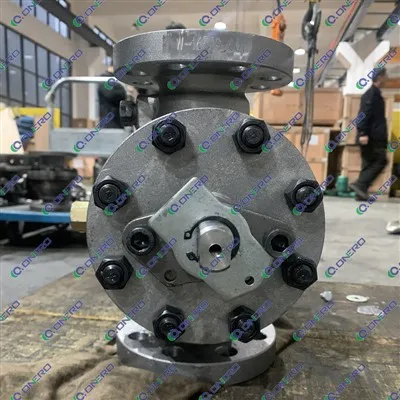
As a provider in the field of three - way ball valves, I have witnessed the widespread application and importance of these valves across different industries. Three - way ball valves are crucial in controlling the flow direction and volume of fluids, making them an essential component in many systems. In this blog, I will delve into the details of how to control a three - way ball valve effectively.
Understanding the Basics of a Three - Way Ball Valve
Before we discuss how to control a three - way ball valve, it's important to understand its fundamental structure and working principle. A three - way ball valve consists of a spherical disc with a port through the center. The ball can be rotated to different positions to direct the flow of fluids between different ports.
There are two common types of three - way ball valves: L - port and T - port. An L - port valve can divert the flow in two directions, either from one inlet to one of the two outlets. A T - port valve, on the other hand, can mix the flow from two inlets or distribute the flow from one inlet to two outlets.
Manual Control of Three - Way Ball Valves
The simplest way to control a three - way ball valve is through manual operation. This method is suitable for applications where the flow needs to be adjusted occasionally and where the system does not require frequent or rapid changes.
Using a Handle
Most three - way ball valves come with a handle that is directly attached to the ball. By turning the handle, you can rotate the ball inside the valve body. The handle usually has markings indicating the different flow positions. For an L - port valve, the handle is turned to either direct the flow to one outlet or the other. For a T - port valve, the handle can be set to mix the flow, distribute the flow, or block the flow between certain ports.
Lever Operators
In some cases, a lever operator is used instead of a handle. Lever operators can provide more mechanical advantage, making it easier to turn the valve, especially for larger valves or those handling high - pressure fluids. They are also designed to be operated quickly, which can be useful in emergency shut - off situations.
Automatic Control of Three - Way Ball Valves
In modern industrial applications, automatic control of three - way ball valves is becoming increasingly common. Automatic control allows for precise and timely adjustments to the valve position, which is essential for maintaining the optimal performance of a system.
Electric Actuators
Electric actuators are widely used to automate the control of three - way ball valves. These actuators are powered by electricity and can be controlled using a variety of methods, such as a programmable logic controller (PLC) or a remote control system.
The advantage of electric actuators is that they offer high precision and repeatability. They can be programmed to open or close the valve at specific times or in response to certain process variables, such as pressure, temperature, or flow rate. Electric actuators also have a relatively long service life and require minimal maintenance.
Pneumatic Actuators
Pneumatic actuators use compressed air to operate the valve. They are popular in industries where there is a ready supply of compressed air, such as manufacturing plants and refineries.
Pneumatic actuators are known for their fast - acting capabilities, making them suitable for applications where rapid valve operation is required. They are also relatively simple in design and easy to maintain. However, they require a reliable source of compressed air and may not be as precise as electric actuators in some cases.
Factors to Consider When Controlling a Three - Way Ball Valve
Flow Rate and Pressure
When controlling a three - way ball valve, it is essential to consider the flow rate and pressure requirements of the system. The valve should be sized appropriately to handle the maximum flow rate and pressure without causing excessive pressure drops or flow restrictions. Incorrect sizing can lead to inefficient operation, increased energy consumption, and even damage to the valve or the entire system.
Media Compatibility
The type of fluid or gas being handled by the valve also affects its control and performance. Different materials are used for the valve body, ball, and seals to ensure compatibility with the media. For example, if the media is corrosive, a valve made of corrosion - resistant materials such as stainless steel or plastic should be used. Additionally, the viscosity of the media can influence the valve's operation. High - viscosity fluids may require a larger valve size or a more powerful actuator to ensure smooth flow control.
System Requirements
The specific requirements of the system, such as the required flow direction, mixing ratios, and control precision, must be taken into account. For example, in a chemical mixing process, precise control of the flow rates from different inlets is necessary to achieve the desired chemical reaction. In a heating or cooling system, the valve may need to be adjusted based on the temperature sensor readings to maintain a constant temperature.
Our Product Offerings
As a three - way ball valve supplier, we offer a wide range of high - quality valves to meet the diverse needs of our customers. Our Three Way Carbon Steel Ball Valve is made of durable carbon steel, which provides excellent strength and corrosion resistance. It is suitable for various industrial applications where reliable flow control is required.
If you are looking for a valve with a more advanced design, our Top Entry Trunnion Ball Valve is a great choice. This valve features a top - entry design, which allows for easy maintenance and inspection. The trunnion - mounted ball provides better stability and reduced torque requirements, making it suitable for high - pressure applications.
We also offer the DBB Double Ball Valve, which is designed to provide a double - block - and - bleed function. This valve is ideal for applications where tight shut - off is required to prevent the leakage of hazardous fluids.
Contact for Purchase and Consultation
If you have any questions about three - way ball valves or if you are interested in purchasing our products, please feel free to contact us. Our team of experts is always ready to provide you with detailed information and technical support. Whether you need a single valve for a small project or a large - scale valve solution for an industrial application, we can meet your needs. Let's start a discussion about your requirements and find the best valve solution together.


References
- ASME Standards on Valves and Fittings
- Valve Handbook by Harold H. Podowski