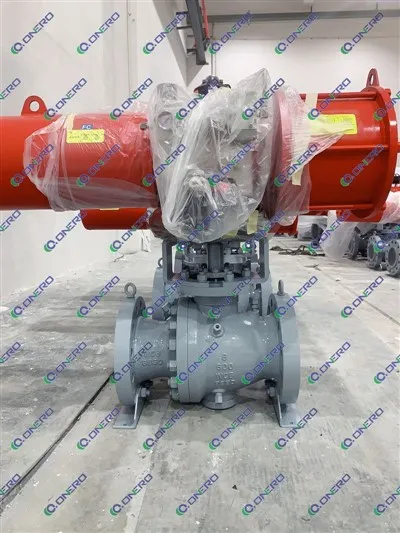
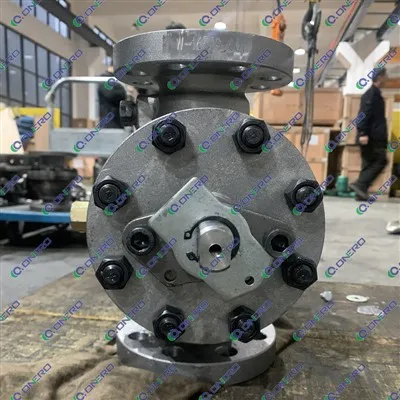
A four - way valve is a crucial component in many chemical processes, offering precision control and flexibility. As a well - established four - way valve supplier, I'm excited to dive into the mechanics of how these valves operate and their significance in the chemical industry.
Basics of a Four - Way Valve
A four - way valve, as the name implies, has four ports. It is designed to direct the flow of fluids (liquids or gases) in multiple directions, providing a high level of control over the movement of substances within a chemical process system. These valves can be operated manually, pneumatically, hydraulically, or electrically, depending on the specific requirements of the process and the level of automation needed.
The valve consists of a valve body, a movable element (such as a ball or a spool), and seals. The valve body contains the four ports, labeled typically as P (pressure), A, B, and T (tank or return). The movable element inside the valve body can be positioned to connect different combinations of these ports.


Working Principles
Ball - Type Four - Way Valves
One common type of four - way valve is the ball - type valve. In a ball - type four - way valve, there is a hollow ball with specific passageways drilled through it. This ball is located inside the valve body and can be rotated.
When the ball is in a certain position, it will align its internal passageways with the ports on the valve body to allow fluid to flow from one port to another. For example, if the valve is designed to control the flow of a reactant in a chemical reactor, when the ball is rotated to a particular position, it can connect the inlet port (P) with one of the output ports (say A). This allows the reactant to flow into a specific part of the reaction system.
As the ball is rotated further, different connections can be made. We can have the fluid flowing from P to B, or we can close the connection between P and either A or B and connect A to T or B to T. This flexibility in flow direction control is extremely useful in chemical processes where different reactants need to be mixed at different times or where waste products need to be removed from specific parts of the system.
Spool - Type Four - Way Valves
Another type is the spool - type four - way valve. A spool is a cylindrical element that slides inside the valve body. The spool has different diameters along its length, and these different diameters are used to open and close the connections between the ports.
When the spool is in one position, it allows fluid to flow from P to A and from B to T. By moving the spool to a different position, the flow paths change. For instance, we can have the fluid flowing from P to B and from A to T. This sliding action of the spool is often controlled by an external force, such as the pressure of a pneumatic or hydraulic actuator or an electric motor.
Applications in Chemical Processes
Mixing of Reactants
In chemical synthesis, different reactants need to be mixed in a controlled manner. A four - way valve can be used to direct the flow of these reactants into a reaction vessel at the appropriate times. For example, in a batch chemical process, one reactant can be introduced first, and then, using the four - way valve, a second reactant can be added at the optimal moment to initiate a specific chemical reaction. This precise control of reactant addition can significantly improve the yield and quality of the final product.
Recycling and Waste Management
Chemical processes often generate waste products that need to be removed from the system. A four - way valve can be used to separate waste products from the main process stream. For example, in a distillation process, a four - way valve can direct the waste stream to a waste treatment unit while allowing the purified product to continue through the main process or be collected for further use. At the same time, if there are any recyclable components in the waste stream, the valve can be adjusted to redirect these components back into the process for reuse.
Process Isolation and Maintenance
During maintenance or in case of a process malfunction, it is often necessary to isolate certain parts of the chemical system. A four - way valve can be used to stop the flow of fluid to a particular part of the system, allowing for safe maintenance work to be carried out. For example, if a pump in a chemical process needs to be repaired, the four - way valve can be adjusted to divert the fluid flow away from the pump and isolate it from the rest of the system.
Advantages of Using Four - Way Valves in Chemical Processes
- Precise Control: Four - way valves offer a high degree of control over the flow direction and flow rate of fluids. This precision is essential in chemical processes where small variations in reactant addition or product removal can have a significant impact on the final outcome.
- Flexibility: They can be easily adapted to different process requirements. By simply adjusting the position of the movable element (ball or spool), the flow pattern can be changed, allowing for different chemical reactions or process steps to be carried out within the same system.
- Reduced Complexity: Using a four - way valve can simplify the piping system in a chemical process. Instead of using multiple two - way valves and complex piping arrangements, a single four - way valve can achieve the same flow control objectives, reducing the overall cost and maintenance requirements of the system.
Our Product Offerings
As a reliable four - way valve supplier, we also provide a wide range of other high - quality valve products, including Top Entry Trunnion Ball Valve, Hard Seal Ball Valve, and Stainless Steel Wafer Ball Valve. These valves are designed to meet the diverse needs of the chemical industry, ranging from high - pressure applications to corrosive environments.
Our Top Entry Trunnion Ball Valve is engineered for excellent sealing performance and durability, making it suitable for demanding chemical processes where pressure and temperature variations are significant. The Hard Seal Ball Valve is ideal for applications where there is a need for resistance against wear and corrosion. And our Stainless Steel Wafer Ball Valve offers a compact and cost - effective solution for various flow control needs in chemical plants.
Contact Us for Your Valve Needs
If you are involved in chemical processes and are looking for reliable valve solutions, whether it's a four - way valve or any of our other products, we encourage you to get in touch with us. Our team of experts is ready to assist you in selecting the right valve for your specific requirements, providing technical support, and ensuring that you have a smooth and efficient procurement process. Reach out to us to start the conversation about how our valves can optimize your chemical processes.
References
- Smith, J. (2018). Chemical Process Instrumentation. Elsevier.
- Davis, R. (2020). Valves in Chemical Engineering: Principles and Applications. Wiley.