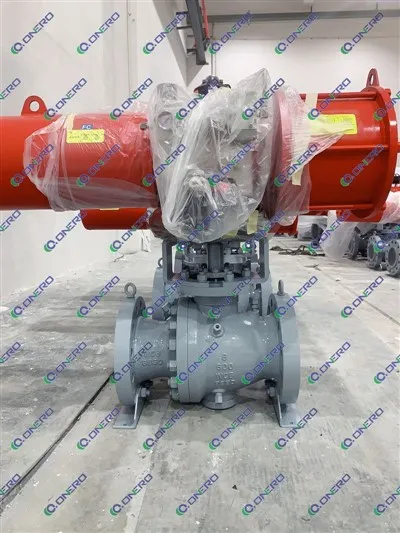
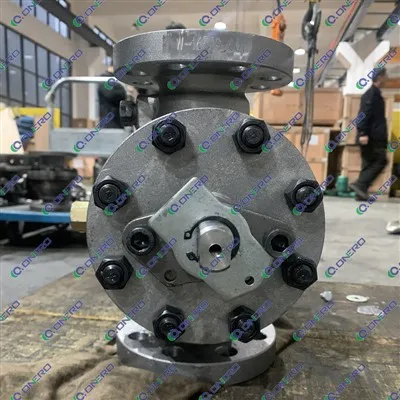
A three-way ball valve is a crucial component in many industrial and commercial fluid control systems. It offers versatility in directing the flow of liquids or gases, allowing for stop, start, and diversion of media. One of the most frequently asked questions from our clients, as a leading 3 way ball valve supplier, is about the minimum flow capacity of a 3 way ball valve. Understanding this parameter is vital for proper valve selection and system design.
Factors Influencing the Minimum Flow Capacity
The minimum flow capacity of a 3 way ball valve is not a fixed value; it is influenced by multiple factors. These factors need to be carefully analyzed to ensure the valve can perform efficiently in a given application.
Valve Design
- Port Size: The size of the ports in a 3 way ball valve has a direct impact on the flow capacity. A smaller port will naturally limit the amount of fluid that can pass through, thus reducing the minimum flow capacity. For example, a 3 way ball valve with a 1/2 - inch port will have a lower minimum flow capacity compared to one with a 2 - inch port.
- Ball Geometry: Different ball geometries, such as full - port, reduced - port, and V - port, can affect the flow characteristics. A full - port ball valve has an opening in the ball that is the same size as the pipe, allowing for almost unobstructed flow. In contrast, a reduced - port ball valve has a smaller opening in the ball, which restricts the flow and results in a lower minimum flow capacity. A V - port ball valve, with its unique V - shaped opening, is designed for precise flow control and can offer variable minimum flow capacities depending on the angle of the V - port.
Fluid Properties
- Viscosity: Viscous fluids, like oil or molasses, offer more resistance to flow compared to less viscous fluids such as water or air. For a given 3 way ball valve, the minimum flow capacity will be lower when handling a viscous fluid. This is because more energy is required to move the viscous fluid through the valve, and the internal resistance of the fluid limits the flow rate.
- Density: The density of the fluid also plays a role. Heavier fluids require more force to be moved through the valve. A valve may have a lower minimum flow capacity for a high - density fluid like mercury compared to a low - density fluid like helium.
System Pressure
- Inlet and Outlet Pressures: The difference in pressure between the inlet and outlet of the valve affects the flow rate. A higher pressure differential generally allows for a greater flow capacity. However, there is a minimum pressure differential required for the fluid to start flowing through the valve. If the pressure differential is too low, the valve may not be able to achieve the minimum flow capacity.
Calculating the Minimum Flow Capacity
Calculating the minimum flow capacity of a 3 way ball valve is complex and often requires the use of specialized equations and fluid dynamics principles. One common approach is to use the valve's flow coefficient, also known as Cv.
The flow coefficient Cv is defined as the number of US gallons per minute (GPM) of water at 60°F that will flow through a valve with a pressure drop of 1 psi across the valve. The relationship between the flow rate Q, the flow coefficient Cv, and the pressure drop ΔP is given by the formula:
[Q = Cv\sqrt{\frac{\Delta P}{\rho}}]
where ρ is the specific gravity of the fluid.
To determine the minimum flow capacity, we need to know the minimum pressure drop across the valve that can still maintain a stable flow. This value can vary depending on the valve design and the fluid properties. In practice, valve manufacturers usually provide Cv values for their products, which can be used to estimate the minimum flow capacity under different operating conditions.
Importance of Knowing the Minimum Flow Capacity
- System Design: In industrial processes, accurate knowledge of the minimum flow capacity is essential for proper system design. For example, in a chemical processing plant, if the minimum flow capacity of a 3 way ball valve is underestimated, it may lead to insufficient flow of reactants, resulting in incomplete chemical reactions. On the other hand, overestimating the minimum flow capacity can lead to the selection of a larger and more expensive valve than necessary.
- Energy Efficiency: Understanding the minimum flow capacity helps in optimizing energy consumption. By selecting a valve with an appropriate minimum flow capacity, the system can operate at the most efficient flow rate, reducing energy waste and operating costs.
Our Product Range and Flow Capacities
As a trusted 3 way ball valve supplier, we offer a wide range of 3 way ball valves to meet different application requirements. Our Wafer Ball Valve is designed for easy installation between flanges and is available in various sizes and materials. The minimum flow capacity of our wafer ball valves can be adjusted according to the specific port size and ball design.


For applications where drainage is required, we also provide Stainless Steel Ball Valve with Drain. These valves are made of high - quality stainless steel, ensuring durability and corrosion resistance. The minimum flow capacity of these valves is carefully engineered to meet the needs of various fluid handling systems.
In addition, our Top Entry Trunnion Ball Valve is suitable for high - pressure and large - diameter applications. The trunnion design provides additional support to the ball, allowing for better control of the flow. We can offer detailed information on the minimum flow capacity of each valve in our product range based on your specific requirements.
Contact Us for Procurement
If you are in the market for 3 way ball valves and need more information about the minimum flow capacity and other technical specifications, please feel free to contact us. Our team of experts is ready to assist you in selecting the most suitable valve for your application. We understand that every project is unique, and we are committed to providing you with the best solutions. Whether you are working on a small - scale plumbing project or a large - scale industrial installation, we have the right valve for you. Start your procurement journey with us today and experience the difference in quality and service.
References
- Crane Company. "Flow of Fluids Through Valves, Fittings, and Pipe." Technical Paper No. 410.
- Perry, Robert H., and Don W. Green. "Perry's Chemical Engineers' Handbook." McGraw - Hill, 2008.