


Wafer Ball Valve
Wafer type ball valve
Wafer style ball valve
Product Introduction
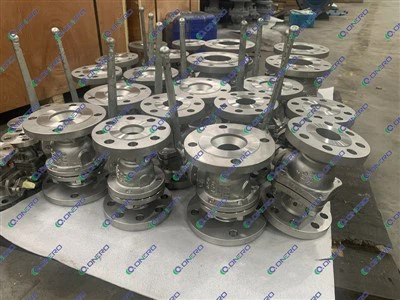
The Wafer Ball Valve is a compact ball valve designed to be installed between two pipe flanges and secured by bolts around the valve body.
Product Advantages
Compact Design
The ultra-thin wafer body can be installed between flanges, making it ideal for piping layouts with limited space.
Easy Installation
Direct installation between flanges using existing bolts, requiring no additional parts.
Reliable Shutdown Performance
Ball valves and soft seals ensure stable operation and a tight seal.
Material Specifications And Dimension


|
No. |
Part |
Material |
|
1 |
Body |
ASTM A216-WCB |
|
2 |
Screwed Cover |
ASTM A216-WCB |
|
3 |
Seat |
PTFE RPTFE PEEK PPL |
|
4 |
Ball |
A351-CF8,CF8M,CF3,CF3M,Duplex |
|
5 |
Thrust Washer |
PTFE |
|
6 |
Gasket |
PTFE Graphite |
|
7 |
Packing |
PTFE Graphite |
|
8 |
Stem |
A105+ENP A182-F6,F304, F316, F316L, F304L,17-4PH, F51 |
|
9 |
Gland Flange |
A216-WCB A351-CF8 |
|
10 |
Lever |
A216-WCB |
|
11 |
Limited Plate |
1015+Cr Carbon Steel+Cr |
|
12 |
Screw |
ASTM A193-B7,B8 |
Why Choose Us
Professional Team
Onero Valve Corporation currently operates two production bases, employing a diverse technical staff of 40 individuals and a total workforce exceeding 140 employees.
Fully Equipped
The factory boasts a comprehensive array of equipment, supported by specialized personnel dedicated to processing, batching, assembly, testing, painting, and boxing, all of whom exercise rigorous process control.
Certifications
Onero Valve Corporation has obtained ISO9001, API-6D, ISO14001 environmental management system certification, and ISO18001 Occupational Health and Safety certification.
Sales Market
Our core products are exported to regions such as the United States, Europe, South Korea, and the Middle East, where we maintain close collaborations with numerous companies and have received praise from our customers.
FAQs
Q: How do you install a wafer ball valve?
A: To install a wafer ball valve, first ensure the pipeline is clean and free of debris. Slide the valve between the flanges, align it properly, and secure it with bolts through the flange holes. Tighten the bolts evenly to avoid uneven pressure on the gasket. Finally, check for any leaks by pressurizing the system.
Q: What materials are commonly used in wafer ball valves?
A: Wafer ball valves are typically made from stainless steel, carbon steel, or brass for the body, while the spherical core and sealing elements often use PTFE (polytetrafluoroethylene) or other high-performance elastomers to ensure durability and corrosion resistance.
Q: Can wafer ball valves handle high-pressure applications?
A: Yes, wafer ball valves can handle high-pressure applications when constructed from appropriate materials and designed according to industry standards. It's important to select a valve that matches the specific pressure rating required for your application.
Q: How do you maintain a wafer ball valve?
A: Regular maintenance includes inspecting the valve for signs of wear or damage, cleaning it to remove any accumulated dirt or debris, and checking the actuator for smooth operation. Lubricate moving parts as recommended by the manufacturer to ensure longevity and reliability.
Q: Are there any safety precautions when operating a wafer ball valve?
A: Always ensure the system is depressurized before performing any maintenance. Use personal protective equipment (PPE) and follow lockout/tagout procedures to prevent accidental operation during servicing. Never force the valve open or closed if it resists movement.
Q: Can wafer ball valves be automated?
A: Yes, wafer ball valves can be equipped with actuators for automation, allowing for remote control and integration into larger systems. This enables precise control over flow rates and is particularly useful in applications requiring frequent adjustments or hazardous environments where manual operation is impractical.
Q: How often should wafer ball valves be tested?
A: Routine testing every six months to a year is generally recommended, depending on the severity of the operating conditions and manufacturer guidelines. Testing should include checking for leaks, verifying proper operation, and assessing the condition of seals and moving parts.
Q: What are common troubleshooting steps for a malfunctioning wafer ball valve?
A: Start by checking for obstructions or debris in the valve body. Ensure the actuator is functioning correctly and that all connections are secure. If the problem persists, inspect the sealing surfaces for damage or wear and replace them if necessary.
Q: Can wafer ball valves be repaired or do they need to be replaced when damaged?
A: Minor issues like worn-out seals can often be repaired by replacing the sealing components. However, significant damage to the valve body or core may require replacement of ensuring optimal performance and safety.
Q: Are there specific installation requirements for wafer ball valves in extreme temperatures?
A: For extreme temperature applications, special attention must be paid to material selection and thermal expansion considerations. Ensure proper alignment and support structures are in place to accommodate potential movement due to temperature variations, preventing undue stress on the valve.
Hot Tags: wafer ball valve, China wafer ball valve manufacturers, suppliers, factory, four way valve, ball valve for valve reliability switches, ball valve flanged, Three Way Ball Valve, Stainless Lockable Ball Valve, trunnion valve
Previous
Jacket Ball ValveYou Might Also Like




Send Inquiry